


Websites and products
Websites with a clear request route, web apps and SaaS from prototype to launch.
IT team · Kazakhstan
We build websites, CRMs and integrations that connect requests, people and data into one clear process.
The most painful one. We show a working version after every stage, not at the end.
Requests get lost.
People write, call and fill in forms, but no one owns the request.
Approvals stall.
Nobody knows which step a document is at or who is waiting for it.
“Where is my order?”
Status is checked by hand, and an answer takes half a day.
Data lives in spreadsheets.
The same thing gets entered in three places.
The website brings no clients.
Requests never reach a manager.
Systems are not connected.
CRM, accounting and the website live apart.
This can be fixed. One process at a time.
Three areas. Each one covers its own part of a request’s path.
Websites with a clear request route, web apps and SaaS from prototype to launch.
Requests, tasks and statuses in one place. Portals for clients, partners and staff.
Telegram bots take over manual work, and APIs connect CRM, accounting, the website and messengers.
The request goes straight into the shared register and does not get lost in chats.
A specific person handles the request. Nobody asks “who is on this?” anymore.
The action and the deadline are recorded in the system, not in someone’s memory.
The client sees what is happening and does not call to find out.
“We need a quote for supplies to three sites. When can you get back to us?”
Client sees
Nothing. To learn the status, they have to call.
Client sees
We are preparing your quote. We will reply today by 15:00.
Request history
Built before CLAY. None of them are client orders, and we say so plainly.
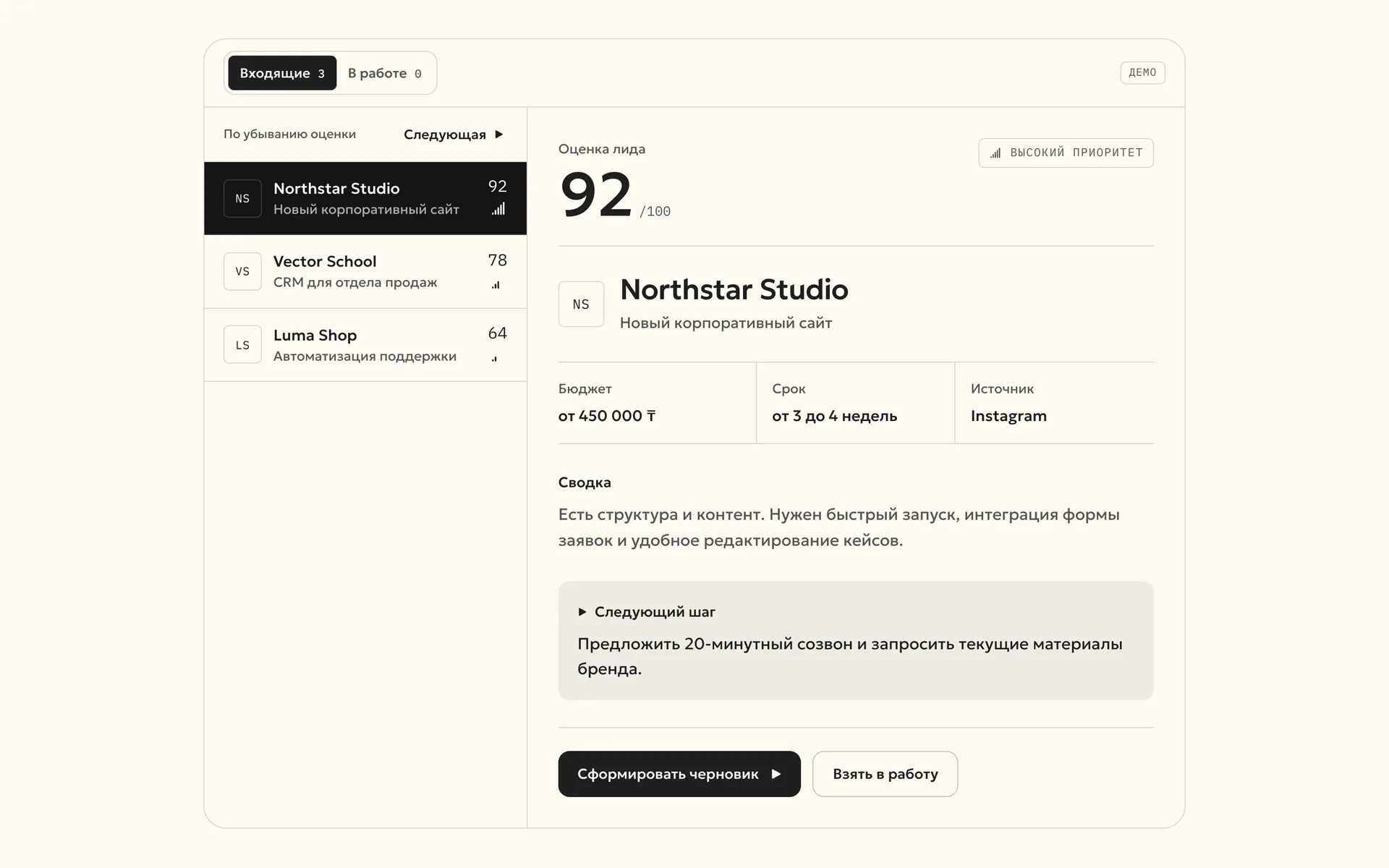
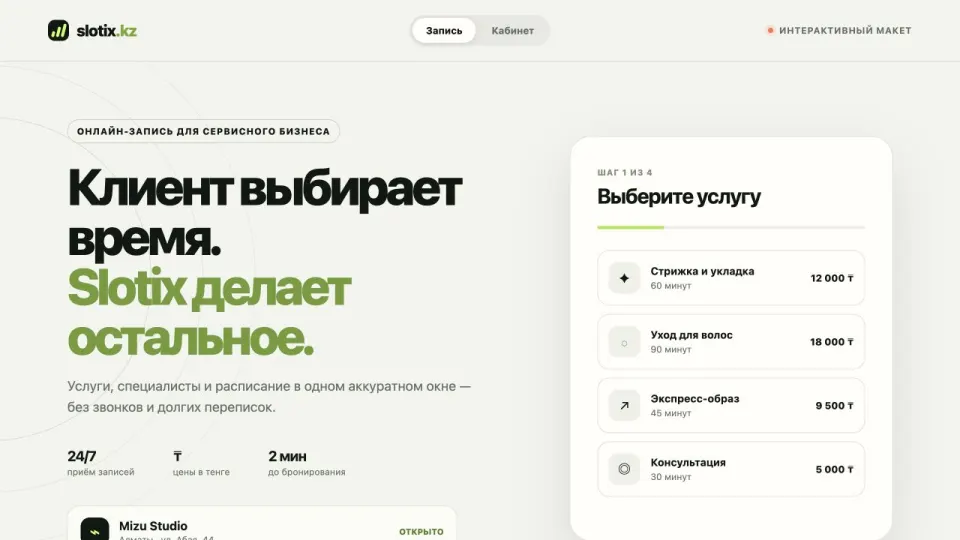
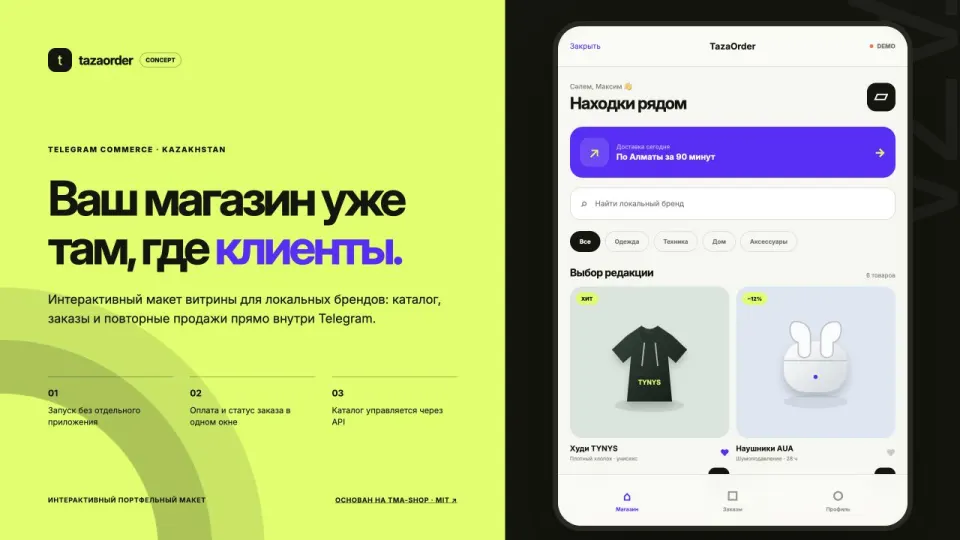
Six steps from the first conversation to launch. We name the cost and timeline after we have looked into the task.
We look at how the process works today. The result is a description and a list of open questions.
Scenarios, roles, screens and data. We show a prototype of the key screens.
The scope of the first stage, its cost and timeline, once the boundaries are agreed.
In stages. After each stage there is a version you can open.
On real requests, documents and exports.
We deploy, hand over the code and access, and fix bugs.
Principles
Describe your most painful task or send an example. We will tell you where to start.